
Flash Chilling vs Cold Brew: Best for Light Roasts?
Introduction: The Summer Brewing Dilemma
Welcome back to your daily brewing routine. As of July 2026, home brewers are desperately seeking better ways to cool down. Specifically, brewing a delicate single origin coffee over ice is often tricky. Therefore, we must choose our preparation method wisely.
Often, large chains like Starbucks serve heavy, dark iced drinks. However, your local neighborhood coffee shop alternative likely uses a completely different approach. Indeed, independent cafes understand that a light roast requires special care. Today, we will explore two very popular methods in the debate of flash chilling vs cold brew.
First, we have the classic overnight steep. Second, we have the rapid chill technique. Ultimately, understanding these methods will elevate your daily cup. Consequently, you will learn exactly how to treat your expensive beans by checking our comprehensive coffee brewing guides. Let us dive into the wonderful world of iced coffee.
Flash Chilling vs Cold Brew: Slow and Steady Cold Brew
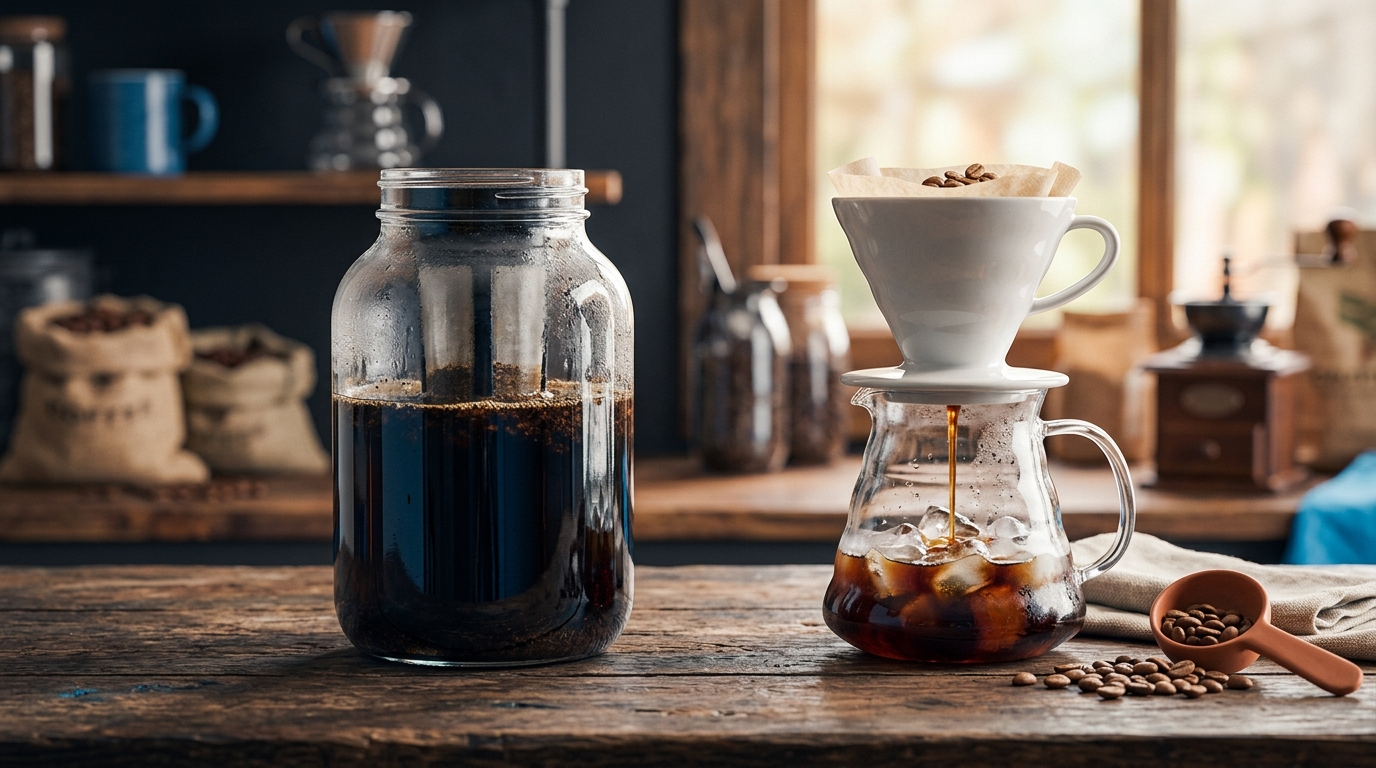
First, let us examine a very popular technique. Cold brew involves steeping coarse coffee grounds in cold water. Typically, this coffee extraction process requires an extraction time of 12 to 18 hours. According to a 2025 brewing study, this slow method creates a very smooth beverage.
Furthermore, it is incredibly forgiving to brew. Therefore, many large coffee chains rely on it for their daily batches. However, how does it interact with a vibrant light roast? Unfortunately, the results are often quite underwhelming. Because the water is cold, it struggles to extract delicate flavors.
Consequently, the resulting cup can taste somewhat flat. In fact, cold water leaves many complex flavor molecules behind inside the coffee grounds. Moreover, this method significantly alters the chemical profile of the drink. For instance, cold brewing mutes the vibrant characteristics of specialty beans.
Additionally, cold brewing limits the expression of terroir. Terroir refers to the unique environmental factors shaping a coffee’s flavor. Therefore, when you use cold water, you mask these beautiful regional characteristics. Consequently, a brilliant Kenyan bean might taste identical to a basic blend.
For a true coffee lover, this homogenization is quite disappointing. Ultimately, while this method is smooth, it is not ideal for delicate beans. Next, we will look at a much faster, brighter alternative.
Flash Chilling vs Cold Brew: Bright and Fast Flash Chilling
Conversely, the flash chilling method offers a completely different experience. Also known as japanese iced coffee, this technique relies entirely on hot extraction. First, you brew the coffee using hot water directly over ice. As a result, the hot water extracts the full spectrum of flavors.
Then, the ice instantly locks those beautiful flavors in through rapid cooling. Furthermore, flash brewing takes only 5 minutes to prepare. This is a massive timesaver compared to overnight steeping. Therefore, it is absolutely perfect for busy mornings in 2026.
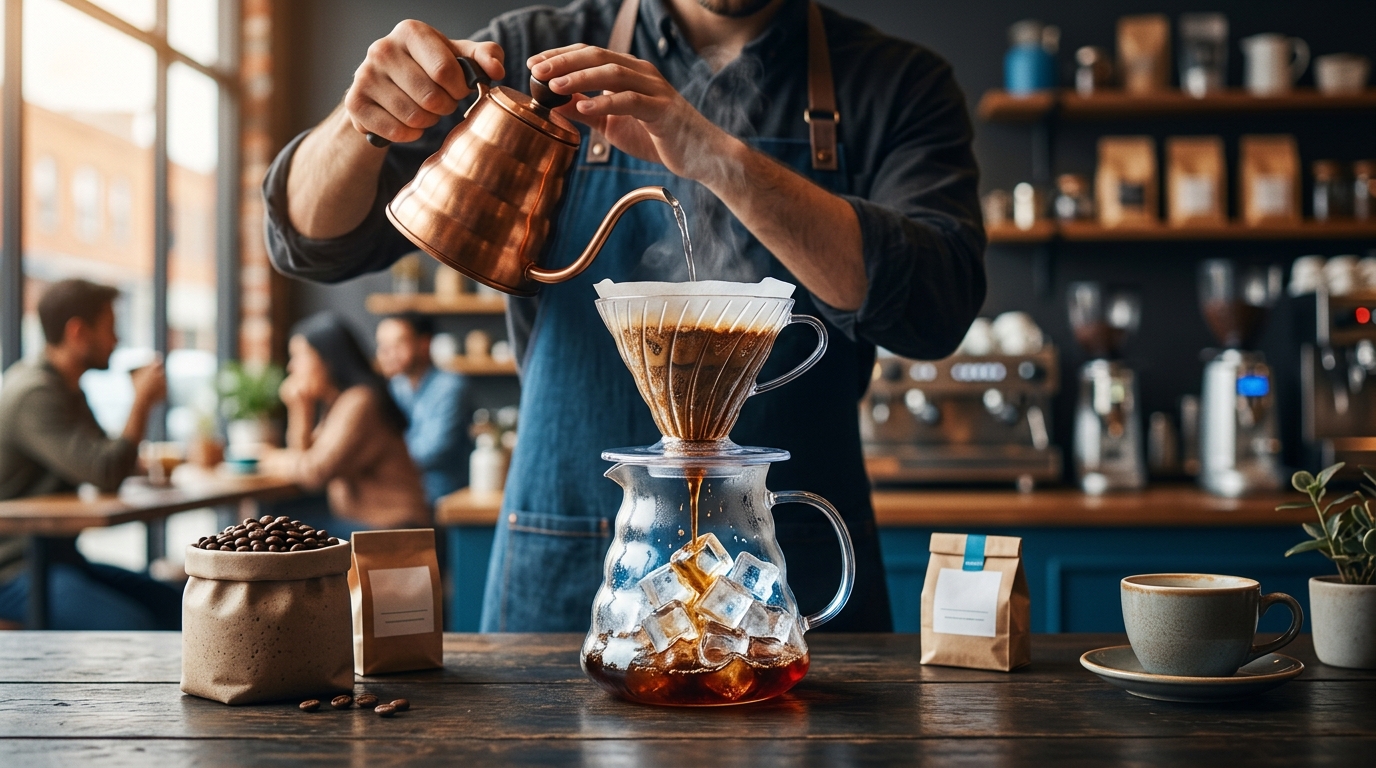
Specifically, here are the main benefits of this rapid technique:
- First, it requires only 5 minutes of your time.
- Second, it captures the full aromatic complexity of the bean.
- Third, it highlights the bright acidity of the roast.
Many unique indie coffee shops use this method exclusively. In fact, finding a cafe that flash chills is the best coffee shop alternative to Starbucks. Moreover, this method bridges the gap between hot and cold drinks.
Additionally, flash chilling is a champion for any light roast. Because it uses hot water initially, it captures the delicate notes perfectly. Consequently, you can actually taste the true origin of the coffee. Indeed, the rapid cooling prevents the coffee from tasting stale or oxidized.
Finally, this method produces a visually stunning beverage. The resulting coffee is crisp, clear, and bright amber in color. Therefore, it looks just as beautiful as it tastes. If you want to replicate an artisanal cafe experience, this is the way.
Flash Chilling vs Cold Brew: Brewing Chemistry
Now, let us dive into the fascinating brewing chemistry. Scientifically, hot water is a vastly superior solvent. According to a recent 2026 Gas Chromatography-Mass Spectrometry (GC-MS) analysis, the differences are staggering. Specifically, 25 of 36 volatile aroma compounds are higher in hot-brewed coffee.
Furthermore, flash brew retains over 25 volatile compounds that cold steeping suppresses. When analyzing flash chilling vs cold brew, the scientific data clearly supports hot extraction for complex coffees. As a result, bright citrus notes are far more perceptible.
Similarly, delicate floral notes shine through beautifully. Therefore, the scientific data clearly supports hot extraction for complex coffees.
Additionally, let us consider the acidity levels. Interestingly, cold steeping has 28% to 50% lower titratable acidity than flash brewing. However, their actual pH levels remain nearly identical. According to The Golden Lamb’s 2025 guide, flash-chilled coffee retains the exact acidity profile of hot-brewed coffee.
Consequently, this results in a brighter, more vibrant taste on the palate. Ultimately, heat is required to pull the best organic acids from the bean.
Extraction Comparison: Visualizing the Flavor
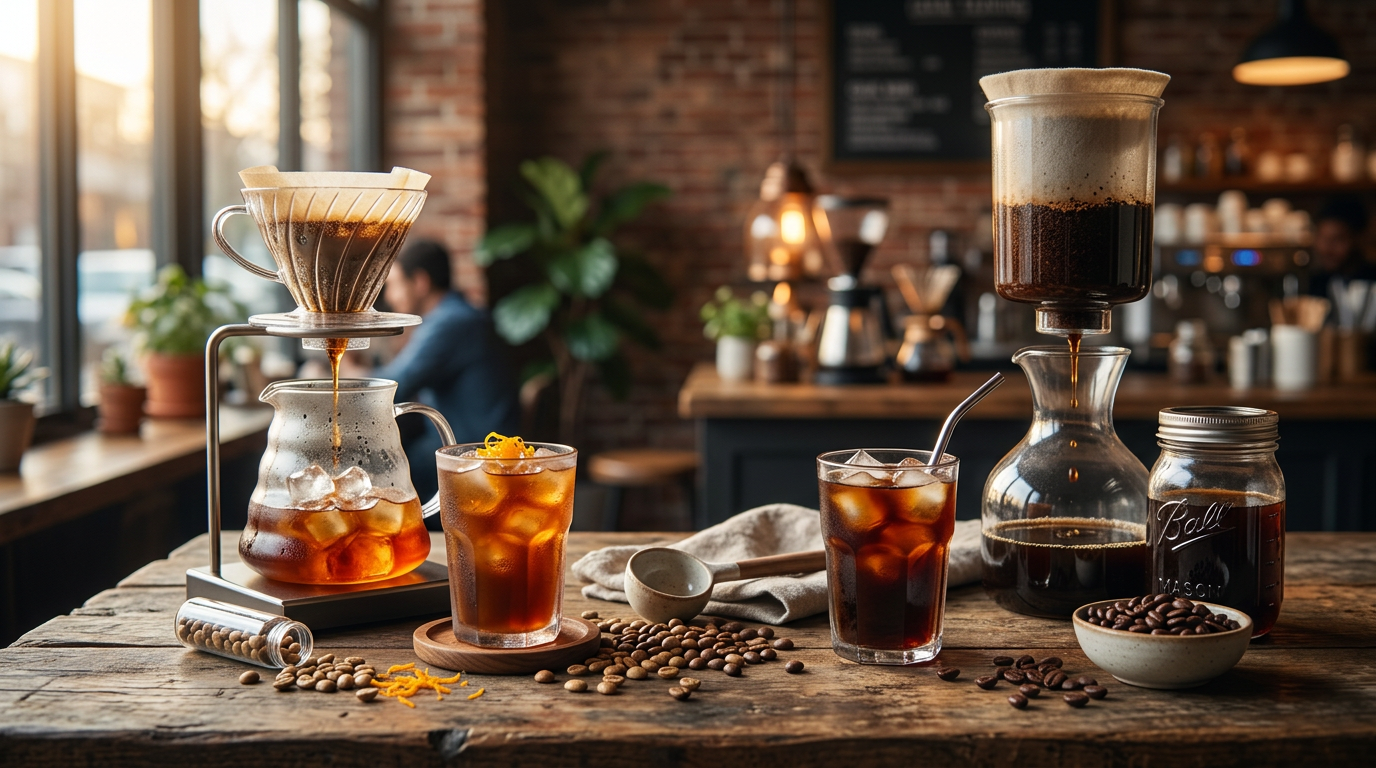
To summarize these differences, let us visualize the distinct extraction processes. First, picture a brewing timeline. On one side, cold steeping stretches out over 18 long hours. On the other side, rapid chilling finishes in just 5 short minutes.
Next, imagine a vibrant flavor spectrum. The slow method highlights heavy chocolate, caramel, and nutty tones. Conversely, the japanese iced coffee method highlights bright berries, florals, and citrus. Furthermore, you can easily visualize the acidity peak. The iced pour-over maintains a high, vibrant peak of acidity. Meanwhile, the long-steeped method flattens that peak completely.
Conclusion: Choosing Your Perfect Summer Brew
In conclusion, choosing between flash chilling vs cold brew comes down to your beans. If you prefer a dark, chocolatey profile, slow steeping is wonderful. However, if you are brewing a delicate light roast, rapid chilling is the clear winner.
First, it saves you an incredible amount of valuable time. Second, it beautifully highlights the bright notes of a single origin bean. Furthermore, by using hot water, you unlock the coffee’s true potential.
Therefore, skip the big corporate chains tomorrow morning. Instead, become your own neighborhood coffee shop alternative right at home. Grab your favorite pour-over cone, some fresh ice, and a kettle. Ultimately, a vibrant, refreshing cup of coffee awaits you. Happy brewing!
Frequently Asked Questions
What is the main difference when comparing flash chilling vs cold brew?
The main difference is the water temperature used during extraction. One uses cold water over 18 hours. Conversely, the other uses hot water over 5 minutes, followed by instant cooling.
Why is hot water better for light roasts?
Hot water is a stronger solvent than cold water. Therefore, it effectively extracts the dense, complex organic acids and volatile compounds found in lighter roasts.
Does rapid chilling water down the coffee?
No, it does not. However, you must brew the coffee stronger than usual. Specifically, you replace a portion of your brewing water with the ice in the carafe.
Which method has more caffeine?
Generally, cold steeping yields a slightly higher caffeine concentration. This is due to the incredibly long contact time between the water and the grounds.
Can I use dark roasts for rapid chilling?
Yes, you certainly can. However, dark roasts may taste slightly bitter when brewed this way. Therefore, we highly recommend using lighter, fruit-forward beans for the best results.