Coffee Water Temperature Secrets for Perfect Home Brewing
Have you ever brewed a morning cup only to find it bitter? Alternatively, maybe your mid-afternoon pick-me-up tasted sour. Many home brewers immediately blame the coffee beans. However, the real culprit is often your coffee water temperature. As a passionate coffee enthusiast, I know that perfect home brewing requires true precision.
Your morning brew pairs beautifully with a protein-packed almond croissant. Meanwhile, an afternoon cup goes great with dark chocolate. This combination perfectly fights that dreaded afternoon crash. But none of these healthy snack combos matter if the coffee tastes bad. Today, we will unlock the secrets of water temperature. We will explore how it completely changes your daily ritual. By the end of this guide, you will consistently brew café-quality coffee right in your own kitchen.
The Science of Coffee Water Temperature and Extraction
To understand great coffee, we must look at chemistry. Specifically, we must see how hot water interacts with coffee grounds. Heat directly drives the extraction rate. Hot water acts as a powerful solvent. Therefore, it pulls essential oils, healthy acids, and natural sugars from the beans.
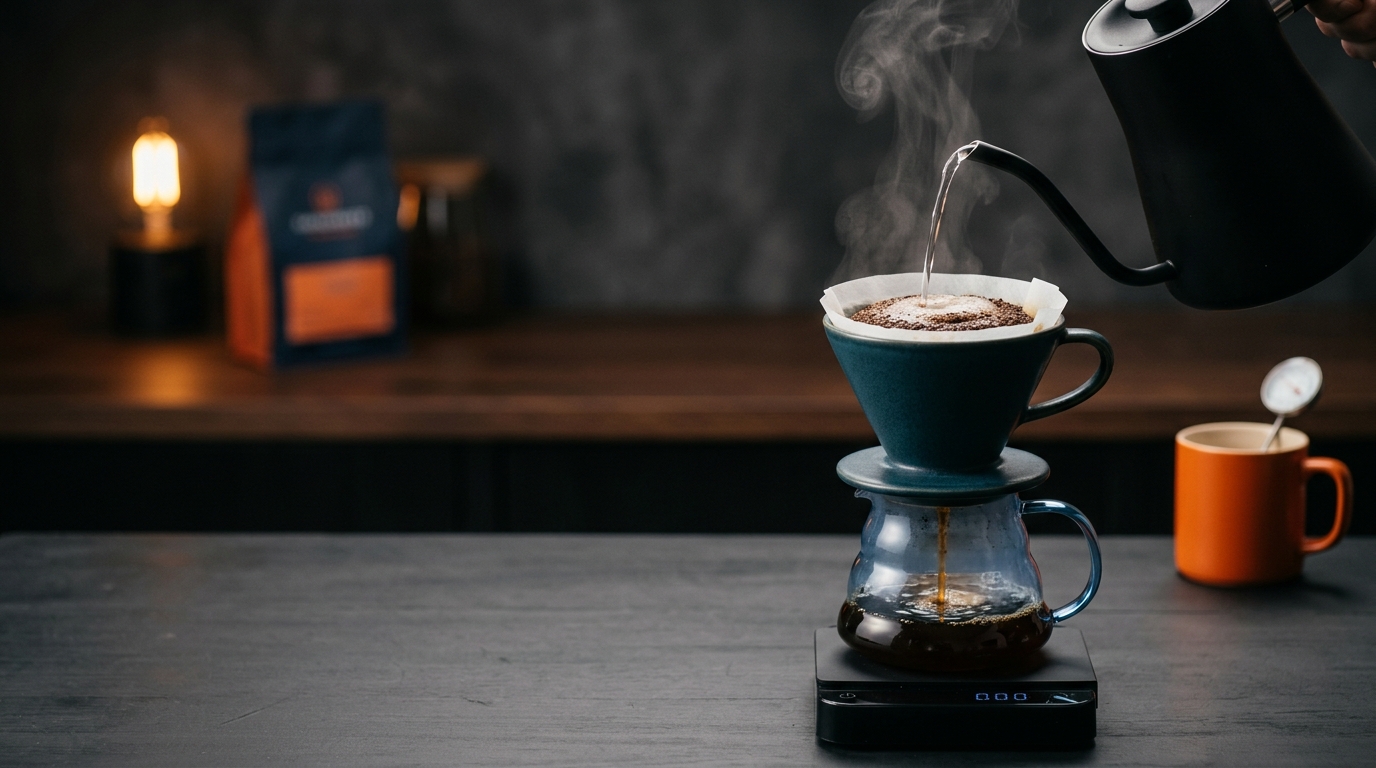
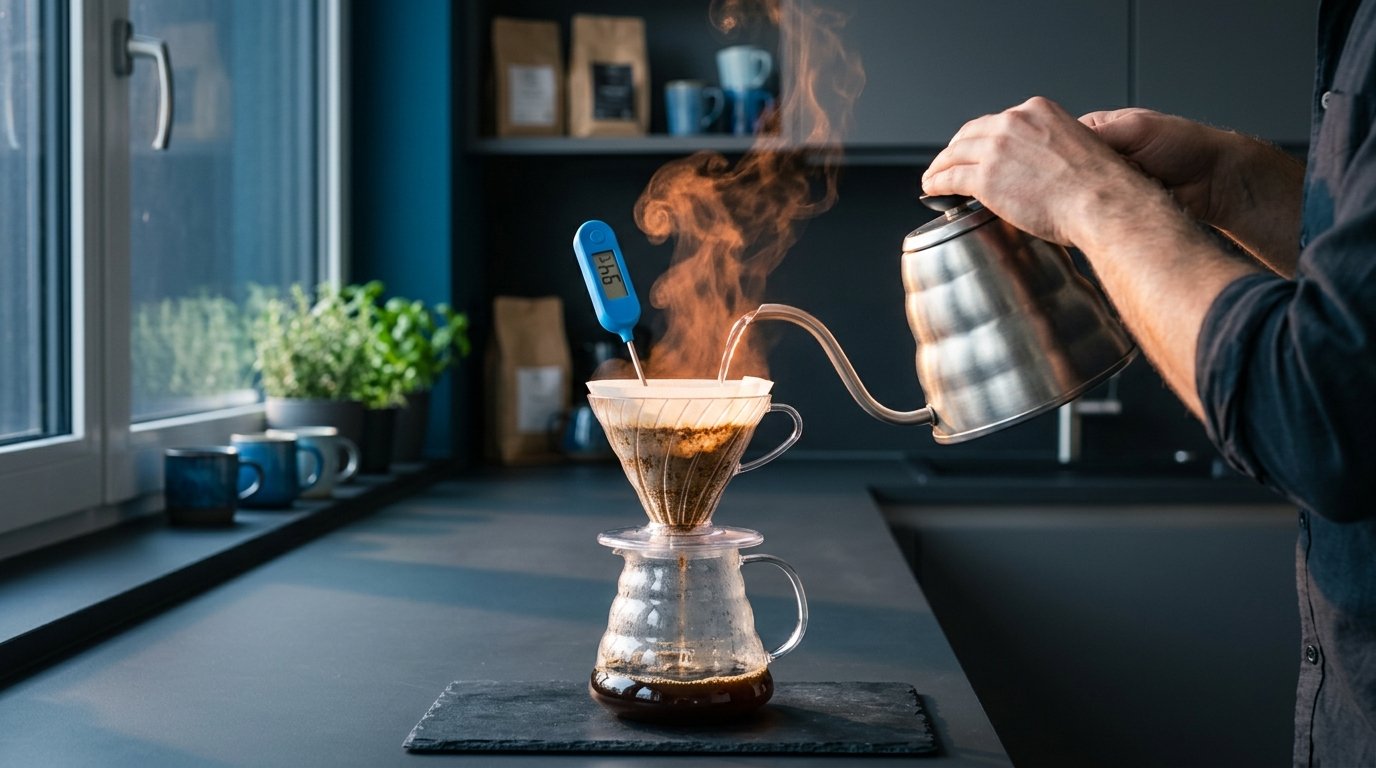
If your water is too hot, you risk severe over-extraction. Consequently, this creates a harsh, bitter flavor profile. On the other hand, water that is too cool leads to under-extraction. As a result, you get a weak, sour, and disappointing cup. According to recent standards from the Specialty Coffee Association in 2026, the ideal hot brewing range is between 195°F and 205°F. Staying within this range guarantees excellent extraction efficiency.
Timing Your Daily Brews
When should you enjoy these perfectly extracted cups? For your morning routine, a warm pour-over between 9:00 AM and 11:00 AM is best. This timing maximizes your natural cortisol levels. Pair this morning cup with a balanced breakfast of avocado toast.
Furthermore, a perfectly brewed afternoon cup around 2:00 PM is crucial. It can easily prevent the dreaded afternoon crash. Honestly, the advice on blending adaptogens into your afternoon brew works wonders for sustained energy. Pair this afternoon coffee with a handful of walnuts. This creates a powerful, brain-boosting snack combo. Ultimately, mastering water temperature ensures maximum flavor development. Thus, every single sip delivers the roaster’s intended taste.
Cold Brew and Coffee Water Temperature Chemistry
Hot coffee is wonderful, but cold extraction requires a completely different approach. According to a comprehensive 2025 guide by Barista Life, cold brew has strict rules. The ideal water temperature for cold brew ranges from 35-45°F (2-7°C). Typically, this is standard refrigerator temperature.
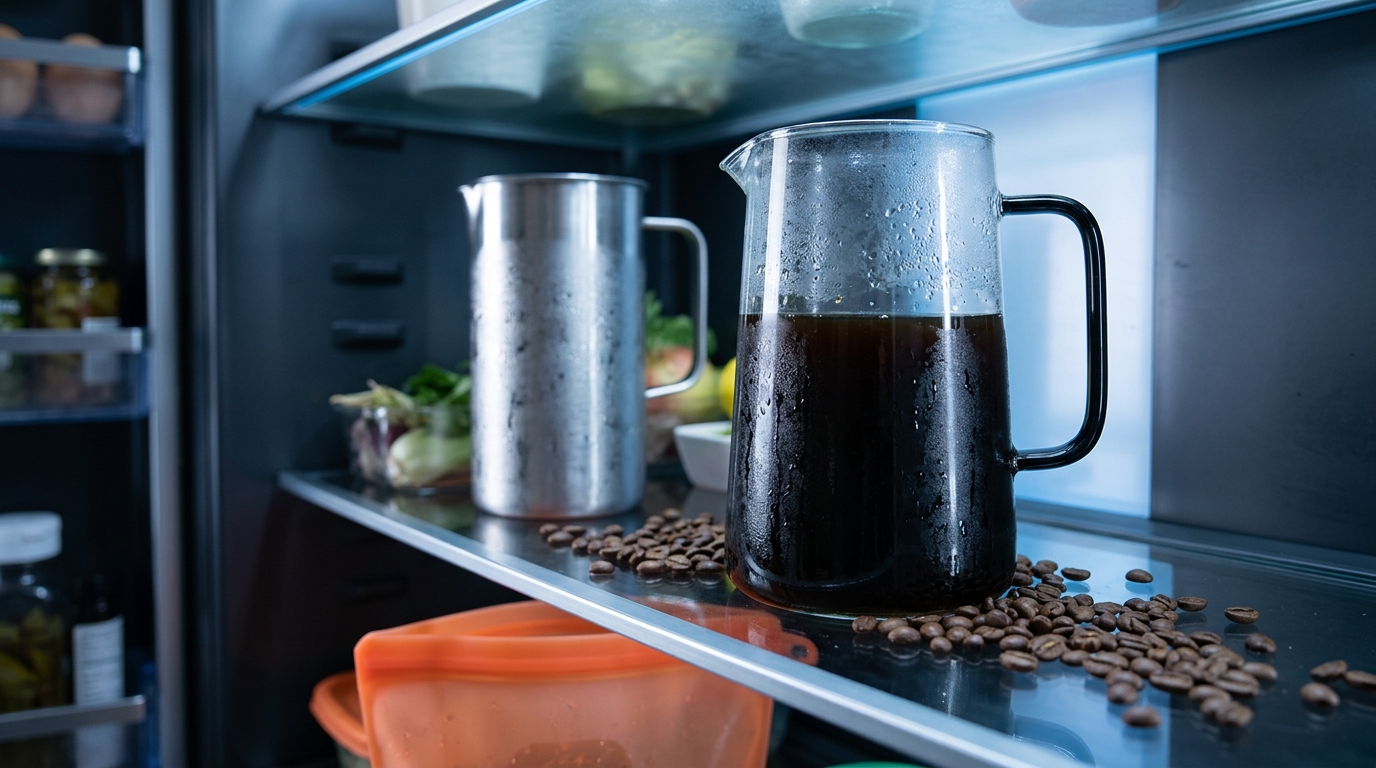
Why does this specific chill matter? The coffee water temperature in cold brew affects extraction rates, flavor development, brewing time, and the final taste characteristics of the coffee. Because the water is cold, the extraction process takes much longer. Usually, this gentle steeping takes between 12 and 24 hours. However, this slow process is exactly what creates low-acid coffee. In fact, the 35-45°F temperature range maintains the smooth, low-acid characteristics that define quality cold brew.
The Importance of Water Quality
Beyond temperature, the actual chemistry of your water plays a massive role. Coffee is exactly 98% water. Therefore, using filtered water is absolutely crucial for success. Understanding your local water characteristics can significantly improve home brewing results.
To achieve the absolute best flavor development, you must consider your water’s chemistry. Simple water testing kits can be used by home brewers today. These kits easily identify mineral content and pH levels. Consequently, you can adjust your brewing protocol immediately.
- Mineral content: Too few minerals make coffee taste completely flat. Conversely, too many minerals make the flavor mute.
- pH levels: Always aim for a neutral pH of 7. This perfectly balances coffee acidity.
- Filtered water: Always use a high-quality carbon filter. This removes harsh chlorine and impurities.
By testing your water, you take total control of your brewing protocol.
The Numbers Behind the Brew
Let us look at the concrete data shaping our coffee habits in 2026. A comprehensive 2025 study on extraction efficiency revealed fascinating insights. Specifically, adjusting water temperature by just 5°F can change the extraction yield by up to 2%.
Additionally, the latest data from Barista Life in 2026 confirms a major health benefit. Brewing cold brew strictly at 35-45°F reduces titratable acidity by 60% compared to hot brewing. This specific metric explains why cold brew is so gentle on the stomach.
Furthermore, a 2026 consumer survey highlighted the importance of water quality. It found that 78% of home brewers who monitored their pH levels reported a noticeable improvement in taste. Ultimately, these numbers prove that precision matters. Applying these statistics to your daily routine will elevate your coffee experience.
The Ultimate Coffee Water Temperature Guide
To make this coffee science easy to digest, we created a handy visual guide to help you master the ideal coffee water temperature.
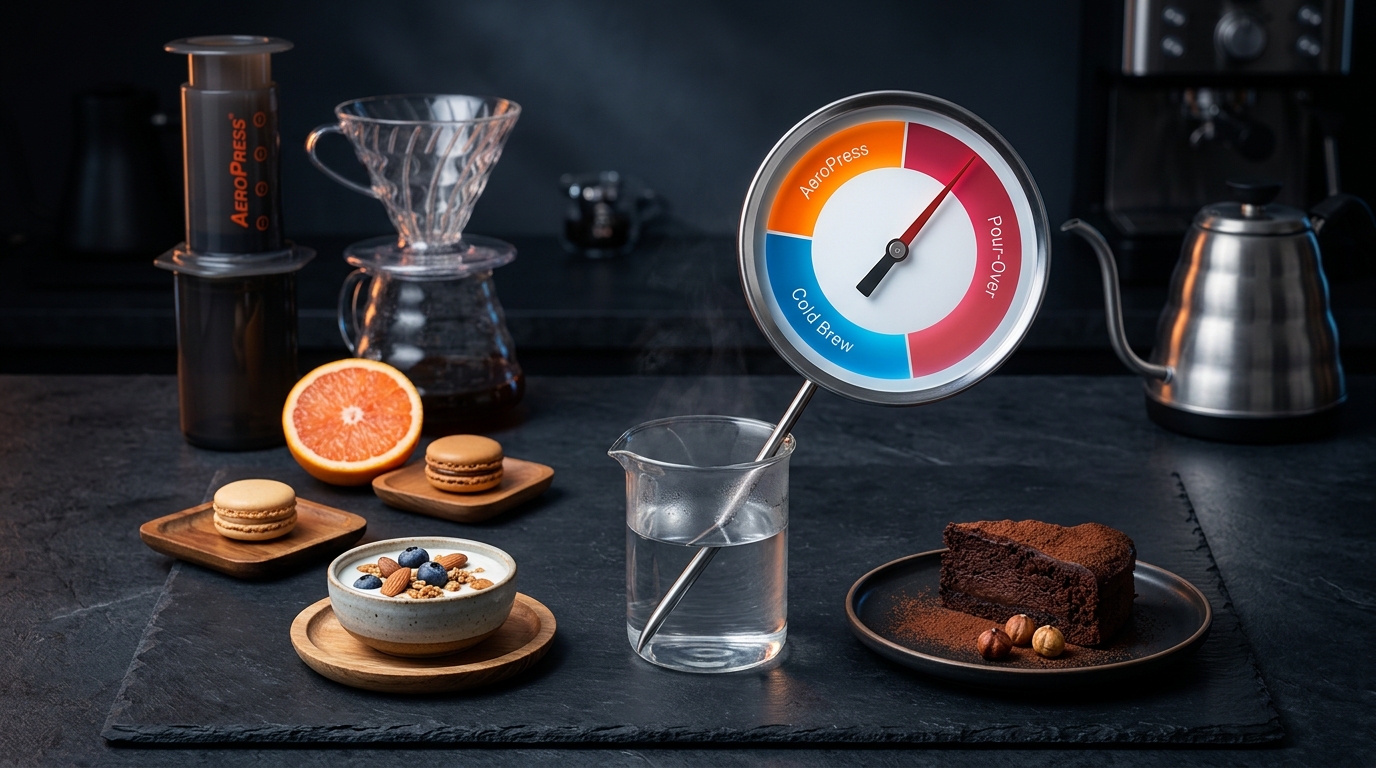
This simple infographic serves as your daily cheat sheet. First, the blue zone highlights the 35-45°F range for smooth cold brew. Next, the orange zone shows medium heat for delicate brewing methods. Finally, the red zone displays the 195-205°F range for optimal hot extraction. Pin this helpful guide near your home coffee station. Consequently, you will never second-guess your kettle settings again.
Summary and Call to Action
In conclusion, managing your coffee water temperature is the ultimate secret weapon for perfect home brewing. From the precise heat needed for hot extraction to the 35-45°F chill required for low-acid cold brew, temperature changes everything. Additionally, monitoring your mineral content and pH levels ensures every cup is a true masterpiece.
Now, it is your turn to experiment at home. Tomorrow morning, carefully check your water temperature before you brew. Then, pair your perfectly extracted coffee with a healthy, balanced snack. Share your upgraded brewing protocol in the comments below, and let us craft better coffee together!
Common Brewing Questions
What is the best time to drink coffee?
For optimal energy, enjoy your morning coffee between 9:00 AM and 11:00 AM. Additionally, an afternoon cup around 2:00 PM helps avoid the dreaded afternoon crash. Always pair your coffee with a balanced, healthy snack.
Can I use tap water for home brewing?
While you can use tap water, it is definitely not recommended. Instead, using filtered water is always best. Tap water often contains chlorine and unpredictable mineral content, which ruins your extraction efficiency.
Why does cold brew take so long to make?
Cold brew requires water between 35-45°F. Because the water is cold, the extraction rate slows down significantly. Consequently, it takes 12 to 24 hours to achieve proper flavor development and low-acid characteristics.
How do I test my water for coffee brewing?
You can easily use simple water testing kits at home. These affordable kits measure your water’s pH levels and total dissolved solids. Therefore, you can adjust your brewing protocol to match the ideal coffee chemistry.