5 Pour-Over Coffee Mistakes Making Your Brew Bitter
Good morning, coffee friends! Today is July 28, 2026, and it is a beautiful day to brew. However, there is nothing worse than waking up, making a pour-over coffee, and tasting a bitter cup. Honestly, pour-over brewing is a beautiful art form. Indeed, it perfectly highlights the bright, floral notes of a good light roast. Nevertheless, simple extraction mistakes can easily ruin your expensive beans.
With recent inflation fatigue, we all want to get the absolute most value out of our coffee. Therefore, wasting good beans is truly heartbreaking. However, do not worry! Today, we will fix your morning routine. Consequently, learning to identify common pour-over coffee mistakes is the best way to save your morning. Let us dive into five common mistakes making your brew bitter and learn exactly how to solve them.
Pour-Over Coffee Mistakes #1: The Wrong Grind Size
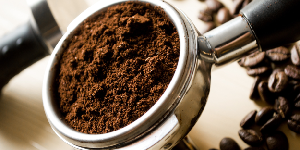
First, let us talk about your grind size. Your grind size directly controls the final flavor of your coffee. If your grounds are too fine, you will cause over-extraction. As a result, you get a harsh, bitter coffee. On the other hand, a sour taste is typically a sign of under-extraction. This happens when water passes through the grounds too quickly.
According to a 2025 guide by Something’s Brewing, adjusting coffee grounds to a finer grind can slow down the extraction process. Consequently, this simple tweak will prevent under-extraction issues entirely. Furthermore, finding that sweet spot is essential for highlighting your beans.
Pour-Over Coffee Mistakes #2: Using Boiling Hot Water
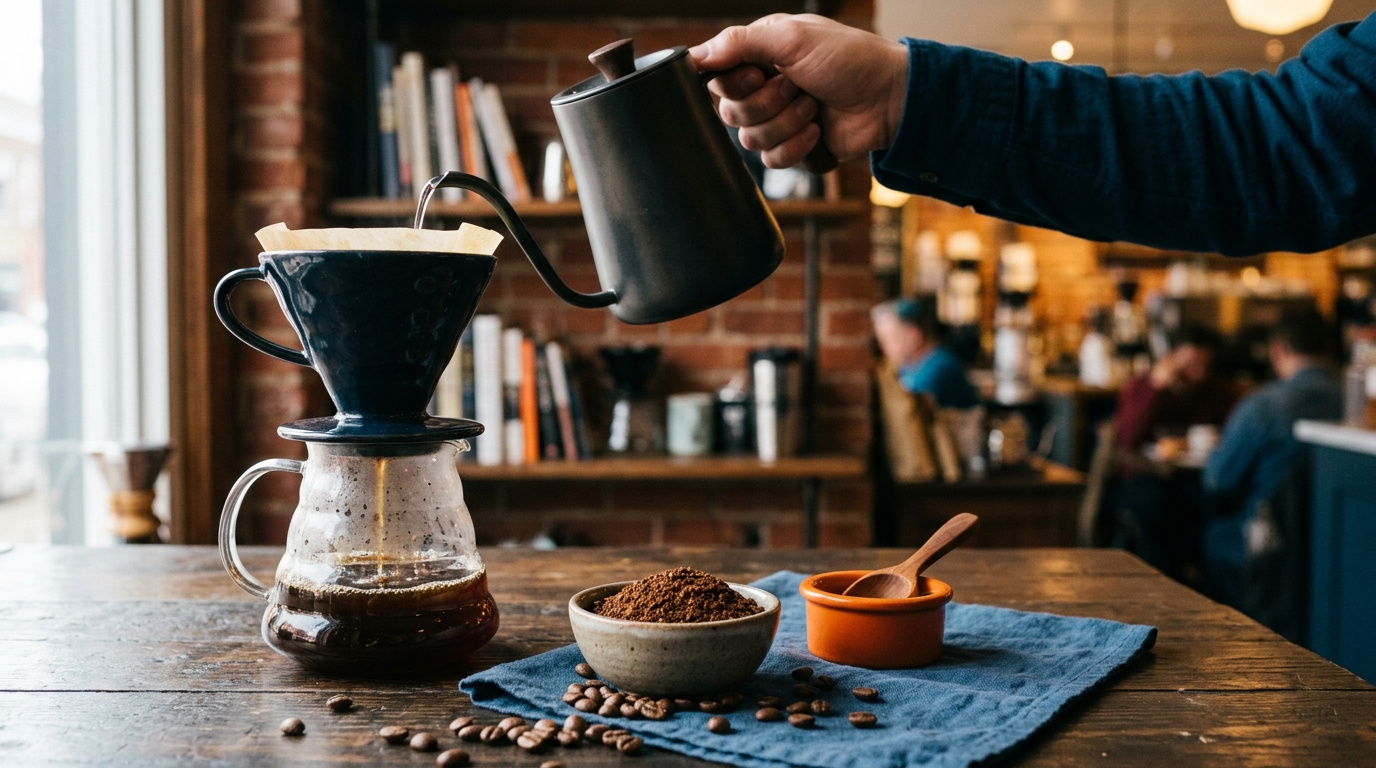
Next, we must discuss your water temperature. Many home brewers make the mistake of using boiling water. Unfortunately, water straight from a boiling kettle will scorch your delicate beans. As a result, it pulls out unpleasant, bitter tannins from the roast. Therefore, this completely masks the nuanced flavors of a good bean.
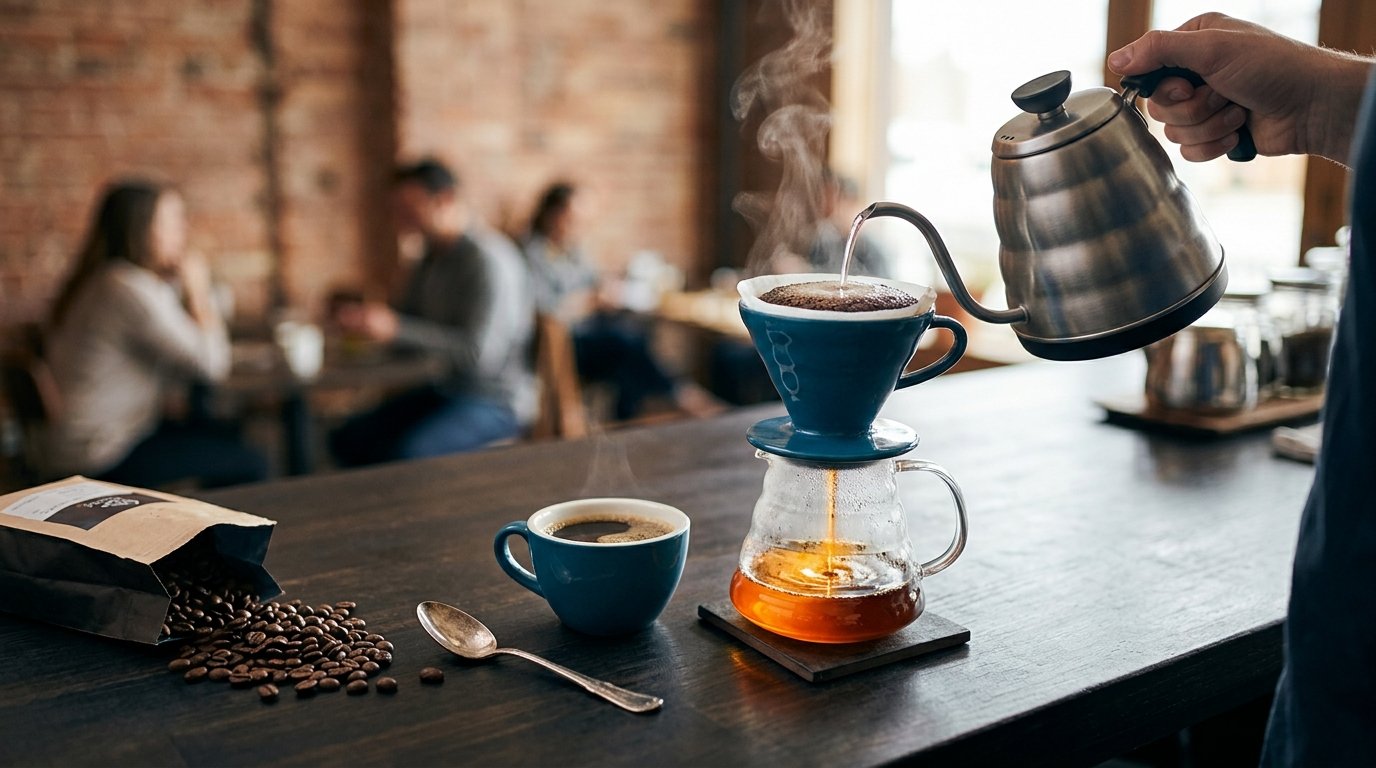
Instead, you should aim for a water temperature between 195°F and 205°F. This specific range gently extracts the sweet, complex flavors of your carefully sourced coffee. Furthermore, using a gooseneck kettle with a built-in thermometer makes hitting this temperature incredibly easy. Additionally, always let your boiling kettle sit for a minute before pouring.
Mistake 3: Skipping the Coffee Bloom
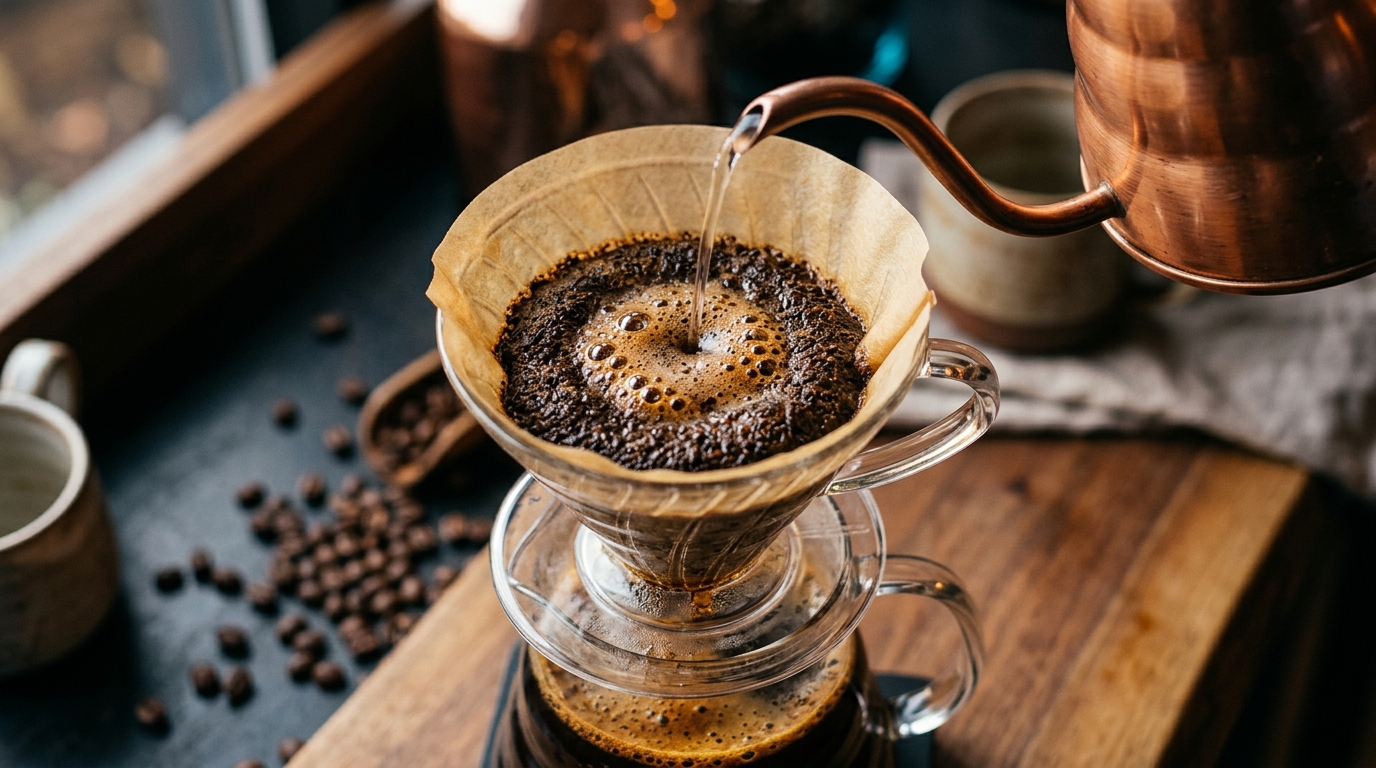
Third, skipping the coffee bloom is a major error. Freshly roasted beans hold trapped carbon dioxide from the roasting process. Therefore, you must let them release this gas before fully brewing. To do this, simply pour a small amount of water over the grounds. Then, wait for about 45 seconds.
You will see the coffee bubble and expand beautifully. In fact, this satisfying process is called the coffee bloom. If you skip this step, the trapped gas repels the water. Consequently, you will end up with a weak, under-extracted cup of coffee.
Mistake 4: Poor Pouring Technique
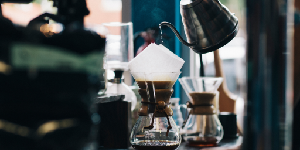
Additionally, your actual brewing technique matters immensely. Pouring all the brewing water at once can lead to terrible extraction. According to a 2026 report by Merit Coffee, a rhythmic, slower pour is absolutely necessary. This careful technique helps release gas, extract sweetness, and avoid channeling.
Channeling occurs when water drills a single, fast path through the coffee bed. As a result, some grounds are over-extracted, while others are completely ignored. To prevent channeling, pour your water in slow, concentric circles. Consequently, this ensures all the grounds are saturated evenly.
Mistake 5: Ignoring Water Quality and Ratios
Finally, let us look at what goes into your cup. Coffee is composed of approximately 98% water. Therefore, water quality is a critical factor in the final taste of the brew. According to 2026 data from Merit Coffee, the ideal water quality for brewing coffee is clean, filtered water.
Specifically, your water should have 75 to 150 ppm (parts per million) of total dissolved solids. If your tap water tastes bad, your coffee will definitely taste bad, too.
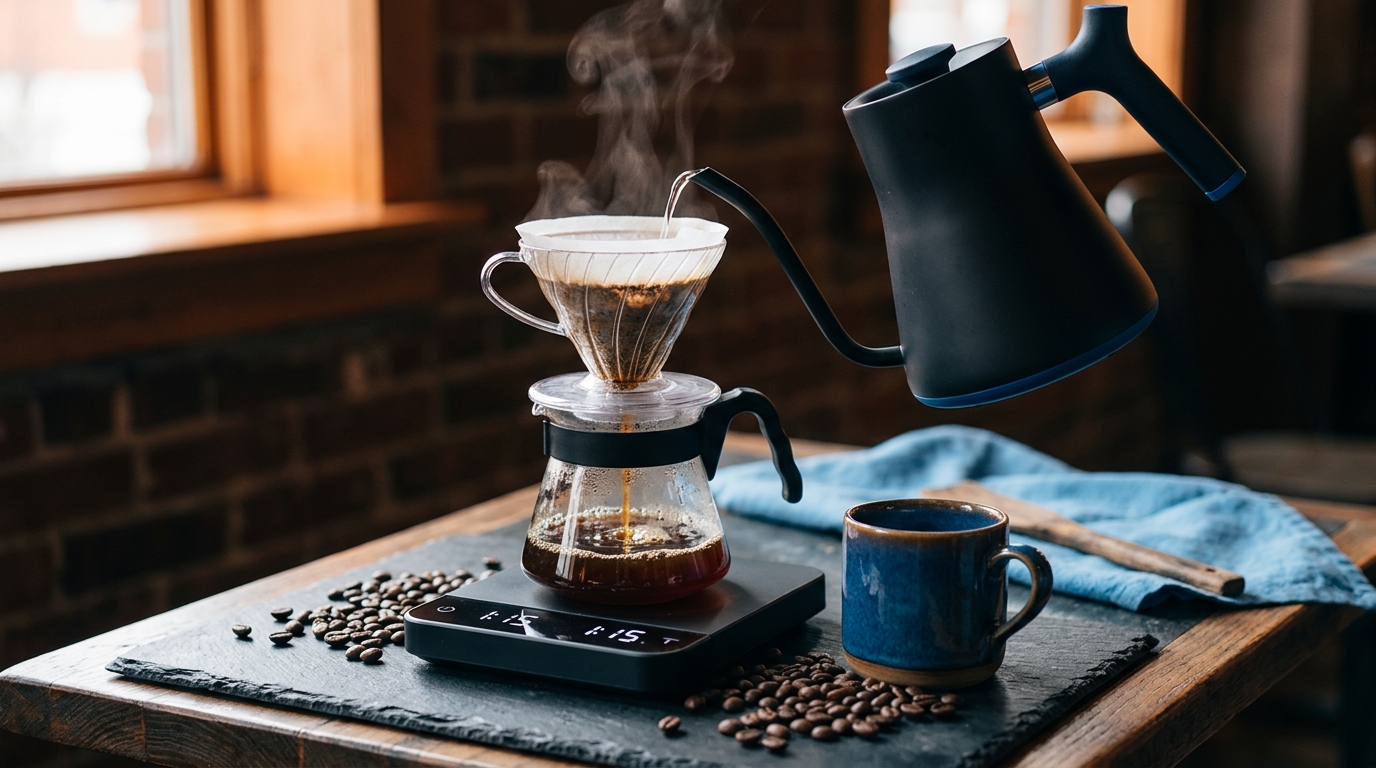
Moreover, using the wrong coffee-to-water ratio is a confirmed recipe for disaster. Eyeballing your measurements often leads to an unbalanced brew. Instead, you should always use a digital kitchen scale. Indeed, a classic 1:15 ratio is a fantastic starting point for most light and medium roasts.
By the Numbers: Avoiding Pour-Over Coffee Mistakes
To truly master your morning brew, you must respect the data. In 2026, precision is everything for passionate home brewers. Let us break down the ideal targets for a flawless cup of coffee.
| Brewing Variable | Ideal Target Range | Impact on Flavor |
|---|---|---|
| Water Temperature | 195°F – 205°F | Prevents scorching and bitterness. |
| Water Quality (TDS) | 75 – 150 ppm | Ensures clean, vibrant tasting notes. |
| Coffee-to-Water Ratio | 1:15 to 1:17 | Balances strength and extraction. |
| Bloom Time | 30 – 45 seconds | Releases gas for even saturation. |
By tracking these specific metrics, you can easily avoid these common pour-over coffee mistakes. Furthermore, you will finally unlock the true potential of your favorite coffee beans.
Brew Better Today
In conclusion, making the perfect pour-over coffee does not have to be difficult. To summarize, always remember these golden rules:
- Use a medium-fine grind size to avoid bitter flavors.
- Never use boiling water on delicate beans.
- Always let your fresh coffee bloom.
- Use a gooseneck kettle for a slow, rhythmic pour.
- Brew with high-quality filtered water.
Inflation fatigue is real, so let us make every single bean count! Therefore, grab your scale, source some freshly roasted beans, and enjoy the beautiful art of home brewing. Happy brewing, friends!
Frequently Asked Questions
How do I fix sour coffee?
A sour taste in coffee is typically a sign of under-extraction. This occurs when water passes through the grounds too quickly. Consequently, adjusting your coffee grounds to a finer grind will slow down the extraction process and fix the sourness.
What is channeling in pour-over coffee?
Channeling happens when water finds the path of least resistance through the coffee bed. As a result, it creates a hole and fails to extract flavor evenly. Therefore, using a slow, rhythmic pouring technique prevents this frustrating issue.
Do I really need to use filtered water?
Yes, absolutely! Because coffee is approximately 98% water, your water quality matters immensely. Moreover, using clean, filtered water with 75 to 150 ppm of dissolved solids ensures the best possible flavor for your morning cup.