Welcome to the Science of Sweeter Coffee
Welcome back to our cozy corner of the coffee world. Have you ever brewed a beautiful, single-origin bean at home, only to find it tastes flat? You are not alone. Often, the hidden culprit is your water chemistry. After all, your morning cup is 98% water. Understanding pour-over water chemistry is the key to unlocking those hidden, vibrant flavors.
If you want to replicate the vibrant flavors found in independent cafes like Sey Coffee in Brooklyn or Metric Coffee in Chicago, you must look beyond the bean. Today, we will explore how tweaking your water transforms your daily pour-over coffee. Consequently, you will learn to unlock sweeter, more balanced cups right in your own kitchen. Let us dive into the magic of minerals and extraction.
The Foundation of Pour-Over Water Chemistry
Every great cup begins with a solid foundation. Specifically, understanding water chemistry is crucial for any home brewer. When you pour hot water over coffee grounds, a complex extraction process begins. However, not all water is created equal. The minerals dissolved in your water act like tiny magnets. They pull flavor compounds out of the roasted coffee. Therefore, the right balance is essential for optimal brewing mechanics.
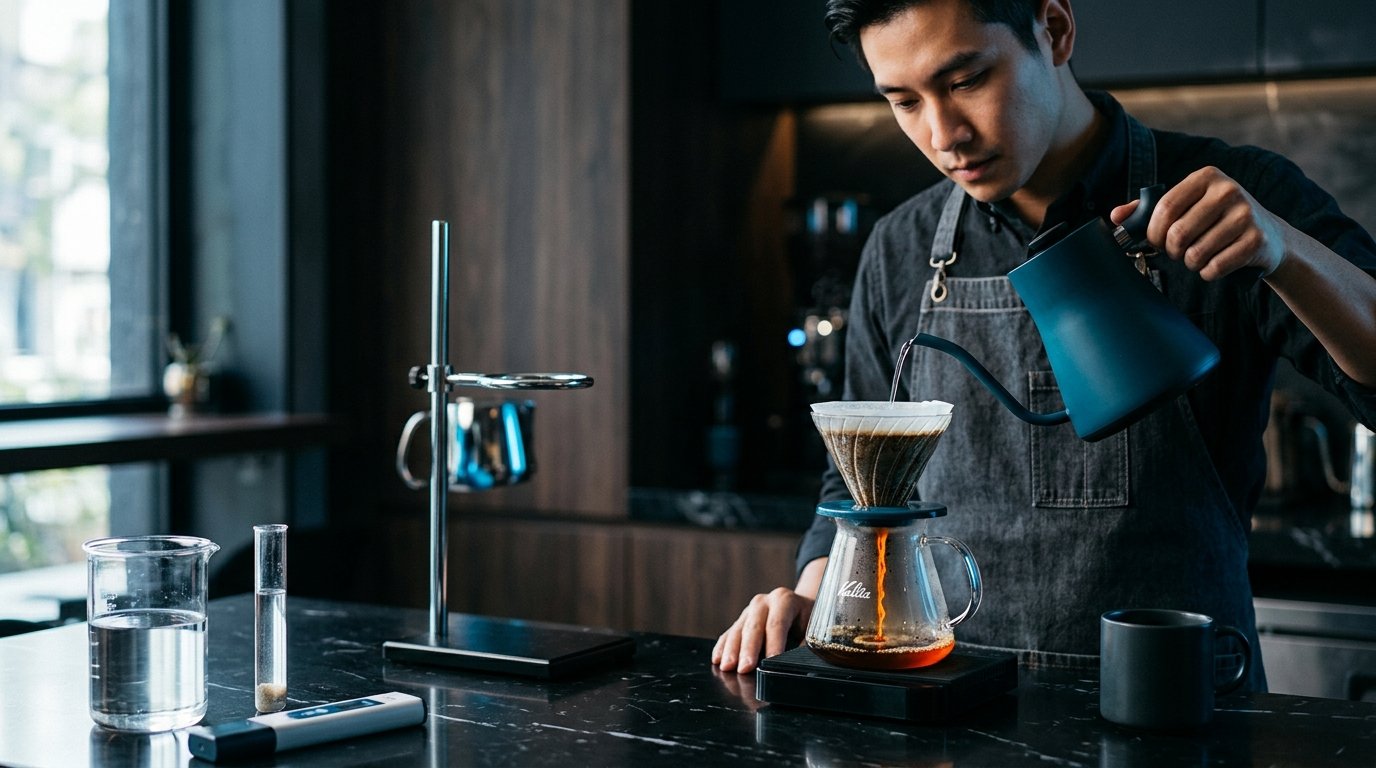
First, let us talk about total dissolved solids, or TDS. TDS measures the total concentration of dissolved substances in your water. Usually, this is expressed in parts per million (ppm). If your TDS is too low, your coffee may taste sharp and sour. Conversely, if your TDS is too high, the cup often tastes muddy or bitter. Thus, finding the sweet spot is vital for a perfect pour-over coffee.

Mastering Pour-Over Water Chemistry and TDS
Many home brewers struggle with unpredictable tap water. In fact, local water hardness varies wildly from city to city. For instance, the water profile in Austin differs greatly from the water in Seattle. Therefore, relying straight on the tap is often a gamble. Instead, modern coffee brewing is shifting toward optimizing mineral content deliberately.
According to a 2026 report by Perfect Daily Grind, baristas now treat water chemistry as a deliberate sensory tool. They adjust mineral levels both before and after extraction. As a result, they can highlight specific flavor notes. For the home brewer, this means taking control of your water base. Ultimately, this proactive approach is the secret to brewing cafe-quality coffee at home.
The Magic of Minerals in Pour-Over Water Chemistry
Now, let us dive into the specific minerals that shape your brew. Primarily, calcium and magnesium are the heavy lifters. Magnesium is highly efficient at extracting fruity and floral notes. Meanwhile, calcium tends to pull out heavier, chocolatey flavors. Together, they form the core of water hardness. However, they are not the only players in your morning cup.
Recently, coffee professionals have highlighted other crucial elements. In March 2026, experts noted that potassium prolongs sweeter flavors in coffee’s aftertaste. Additionally, chloride creates a beautiful roundness and balance in the cup. Therefore, having a mix of these minerals is ideal. Without them, your pour-over coffee will simply lack depth and character.
The Rise of Remineralization
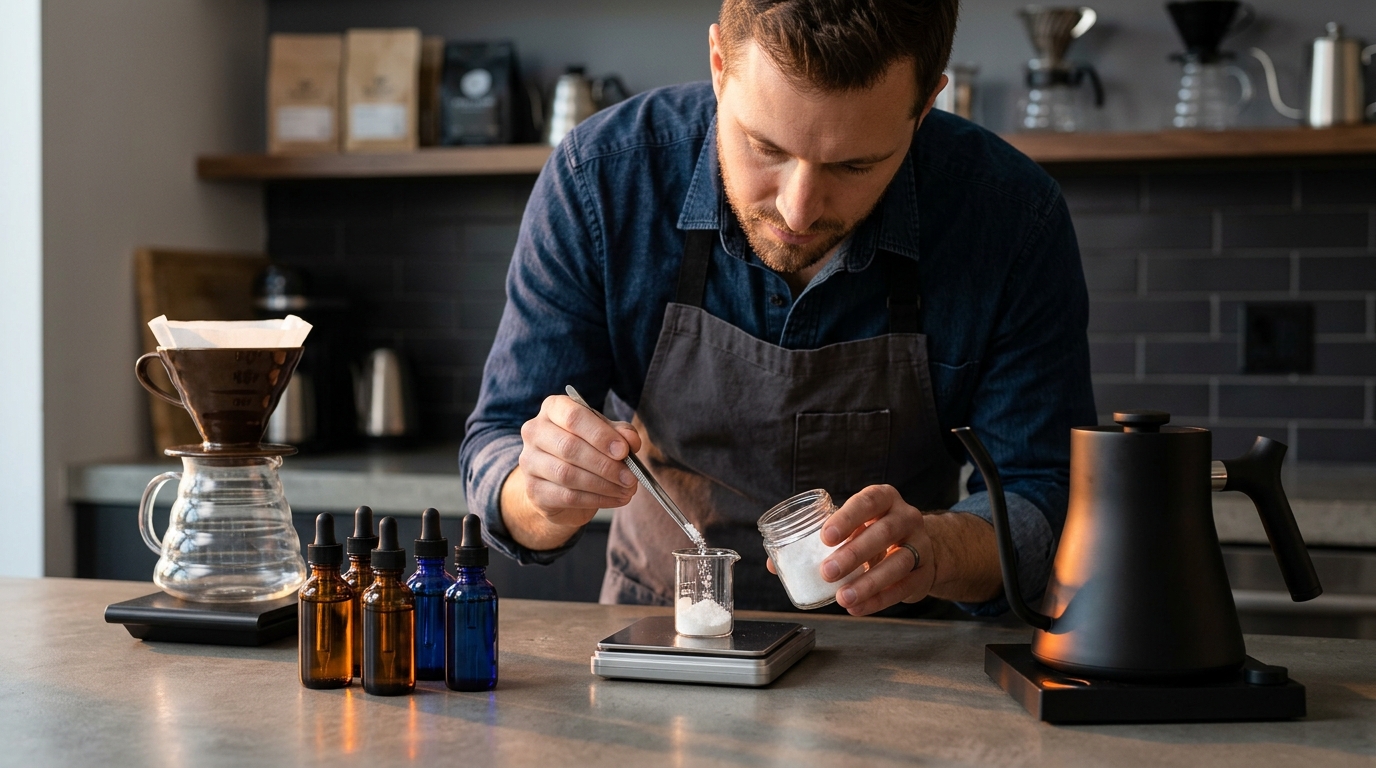
So, how do we achieve this perfect mineral balance? The answer lies in reverse osmosis and remineralization. First, reverse osmosis (RO) strips the water of all impurities and minerals. This step leaves you with a completely blank canvas. Next, you add the good stuff back in. This phase is where true flavor customization happens.
According to Home Pour Over in 2026, remineralization kits are increasingly popular. Home brewers use these kits after RO or cartridge filtering. Specifically, they restore balanced levels of calcium, magnesium, and sodium. Consequently, you can tailor your water to match the profile of your favorite beans. It is a simple yet revolutionary step for your daily routine.
By the Numbers: Brewing Standards for 2026
Data drives our understanding of perfect extraction. Let us look at current industry standards for brewing water:
- High-TDS Water: Water above 150 ppm requires an extended total brew time of 3:30 to 4:30.
- Standard Water: Lower TDS water generally requires the standard 3:00 to 3:30 timeframe.
- Tap Water Solutions: For 150-200 ppm tap water, a cartridge filter combined with tight pour discipline yields cleaner cups.
According to a 2026 guide by Home Pour Over, these adjustments pull out optimal flavors that high-TDS water might otherwise mask. Therefore, adapting your brewing mechanics is essential. Furthermore, these data points prove that precision matters. Together, these strategies consistently yield sweeter, more vibrant cups.
Visualizing the Perfect Pour
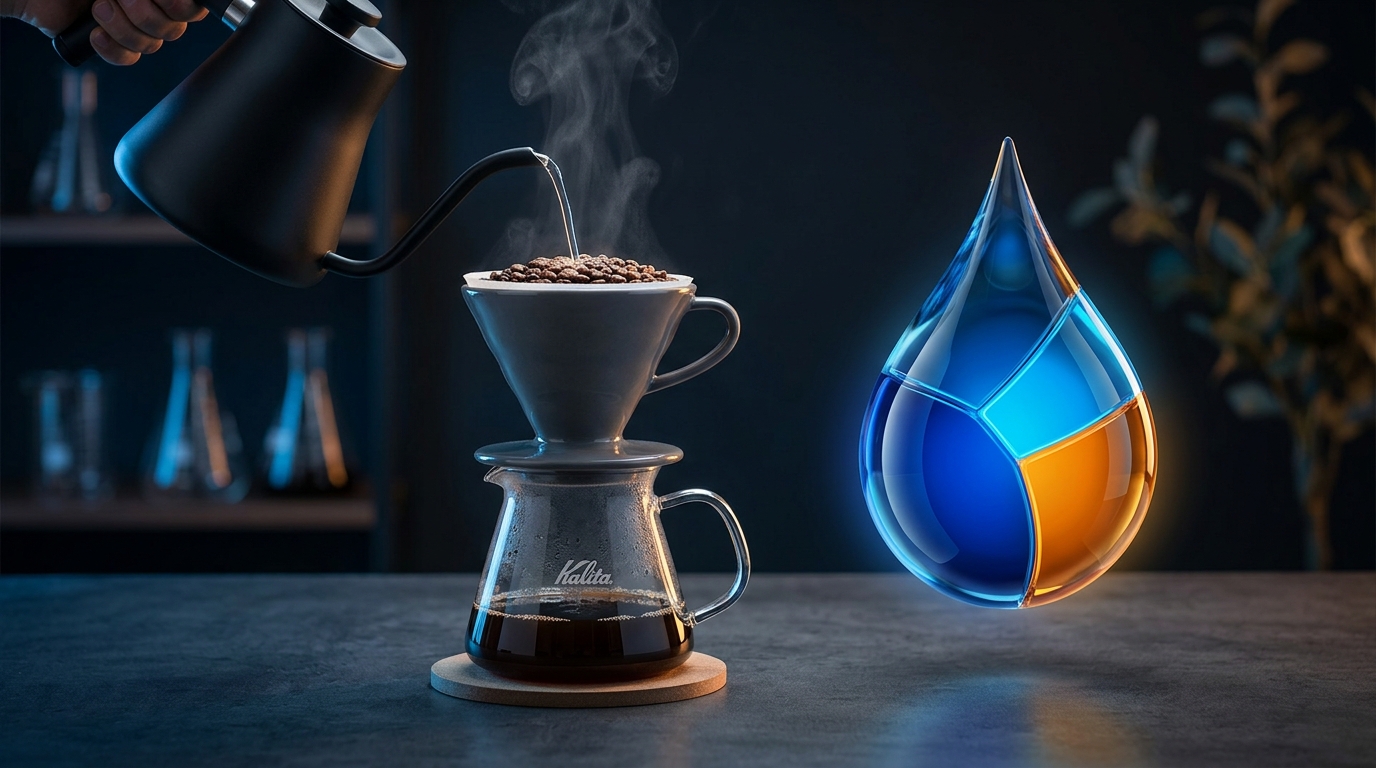
To truly master pour-over water chemistry, visual guides are incredibly helpful. Imagine a detailed infographic breaking down the ideal mineral composition. First, the graphic displays a large water droplet split into color-coded sections. The largest section represents magnesium and calcium, the primary drivers of extraction. Next, smaller slivers highlight potassium for sweetness and chloride for balance. Finally, a timeline at the bottom illustrates the extended 4:30 brew time required for high-TDS water. This visual tool simplifies complex brewing mechanics. Consequently, it makes advanced coffee science accessible for every passionate home brewer.
Elevate Your Daily Brew
In conclusion, mastering pour-over water chemistry is a game-changer for your daily pour-over coffee. By understanding total dissolved solids, you take control of your extraction. Furthermore, using remineralization techniques allows you to highlight the best notes in your beans. Whether you use a cartridge filter or a full reverse osmosis system, your efforts will be rewarded. Potassium will bring out sweetness, while chloride adds beautiful balance. Ultimately, you can rival the best independent cafes right in your own kitchen. Are you ready to upgrade your morning routine? Start by testing your tap water today, and let us know your results in the comments below! Keep brewing, and stay cozy.
Frequently Asked Questions
What is the ideal TDS for pour-over coffee?
For the sweetest extraction, a TDS between 75 and 150 ppm is generally ideal. However, as of 2026, many brewers adjust this baseline depending on their specific roast and mineral composition.
Can I use regular tap water for coffee?
Yes, but it depends on your local water hardness. If your tap water is between 150-200 ppm, using a cartridge filter alongside tight pour discipline can yield excellent, clean results.
Why do baristas add potassium to brewing water?
According to coffee professionals in March 2026, potassium helps prolong sweeter flavors in the coffee’s aftertaste. It is a fantastic tool for enhancing light, fruity roasts.
What is a remineralization kit?
A remineralization kit contains precise blends of minerals like calcium, magnesium, and sodium. Brewers add these to distilled or reverse osmosis water to create the perfect brewing canvas.