Stop Using Tap Water for Pour-Over Coffee
Welcome back, fellow coffee lovers! You spend hours sourcing the perfect single-origin beans. You might even roast them yourself to catch those delicate floral notes. However, your morning brew still tastes a bit dull. Why does this happen? The culprit is likely flowing right out of your kitchen sink. Today, we need to talk about why using tap water for coffee is a bad idea. Water makes up the vast majority of your cup. Therefore, if your water is subpar, your coffee will be too. Let us fix that together! By tweaking your water chemistry, you can unlock vibrant flavors you never knew your beans had. Let us dive into the science of the perfect cup.
The Chemistry Behind Your Daily Brew
To understand why water matters, we must look at the science of extraction. When you brew coffee, water acts as a solvent. It pulls flavors, oils, and aromatics out of the roasted beans. Interestingly, a standard pour-over coffee is composed of 98 to 99% water and only 1 to 2% dissolved coffee solids. On the other hand, espresso contains roughly 90% water and 10% dissolved coffee solids. (According to a 2026 report by the SYPS Hydration Blog). Because your pour-over is almost entirely water, water chemistry heavily dictates the final flavor profile. If you ignore your water quality, you are ignoring 98% of your beverage.
Why Minerals Matter
You cannot just use pure, distilled water for coffee brewing. In fact, you actually need some minerals to extract the best flavors. Specifically, calcium and magnesium are essential for a great cup. Calcium enhances the heavy, sweet notes in your coffee. Meanwhile, magnesium is fantastic at pulling out complex, fruity acids. However, you need these minerals in the correct balance. If your water lacks them, your coffee will taste flat and empty. Conversely, if your water has too many minerals, it cannot absorb the coffee compounds properly. As a result, you get a weak, under-extracted cup. Therefore, controlling your mineral content is the absolute secret to brewing a café-quality pour-over at home.
The Hidden Dangers of Tap Water for Coffee
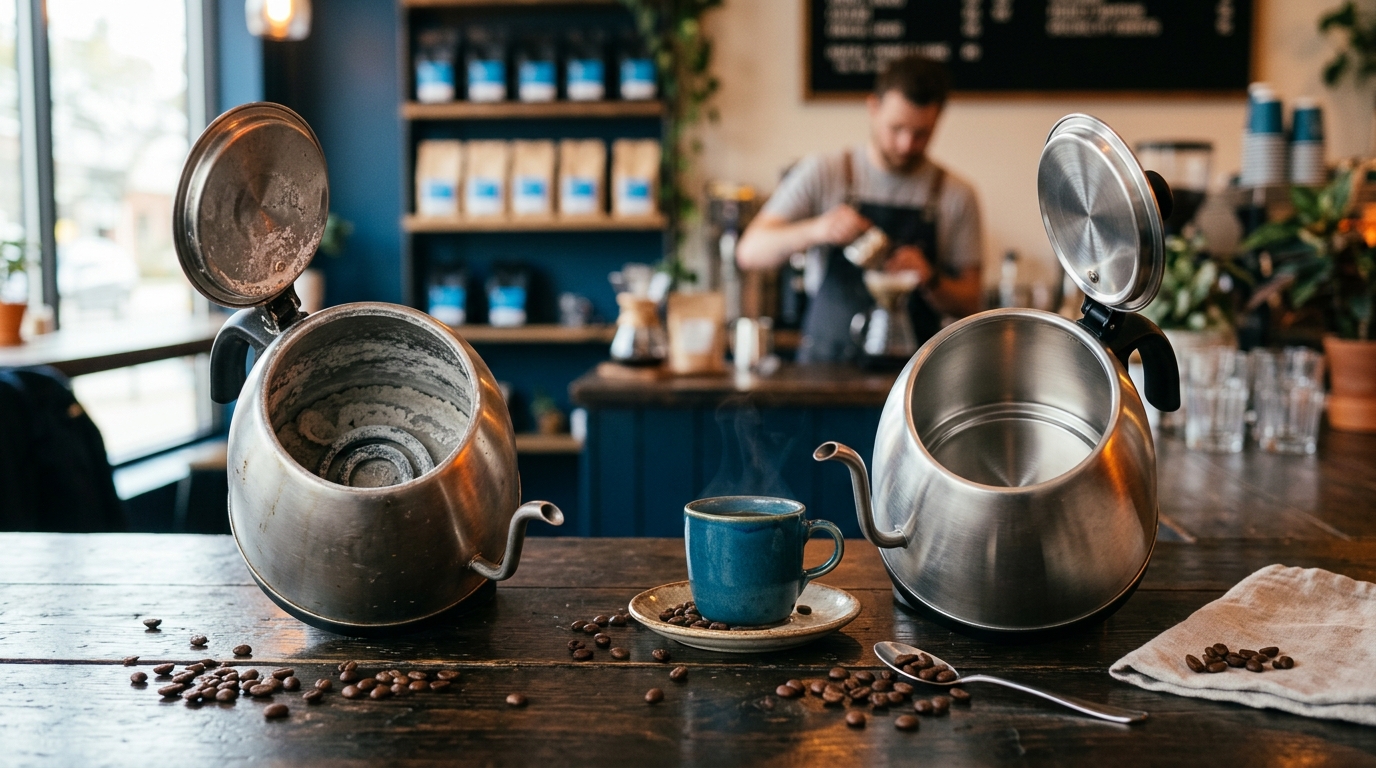
Unfortunately, tap water is wildly unpredictable. Depending on where you live, municipal water can completely ruin your carefully sourced beans. First, let us talk about hard water. Hard water contains excessive levels of calcium and magnesium. While we need some minerals, too much causes serious problems. Over time, hard water leads to stubborn limescale buildup inside your expensive gooseneck kettle. Moreover, it mutes the bright, acidic notes of a good light roast.
Contaminants and Aging Pipes
Beyond minerals, tap water often carries unwanted guests. For example, chlorine is commonly used to treat city water. Sadly, chlorine gives coffee an awful, chemical aftertaste. Additionally, aging infrastructure poses a huge risk. As of 2026, there are estimated to be between 6.1 and 10.2 million lead service lines still in use across the United States. Furthermore, homes built before 1986 often feature plumbing materials containing lead. These include old lead pipes, faucets, or solder. (Source: SYPS Hydration Blog).
Besides lead, older pipes often leach iron and manganese into your water. When you heat this water for coffee brewing, these metals oxidize rapidly. Consequently, this oxidation gives your beverage a harsh, metallic, or bitter taste. Specifically, unfiltered tap water introduces three major problems:
- Harsh chemicals: Chlorine ruins the delicate taste of your brew.
- Heavy metals: Lead and iron pose health and flavor risks.
- Unpredictable minerals: Random calcium levels cause extraction issues.
You spent good money on those beautiful beans. Therefore, you should not let rusty pipes dictate your morning experience.
Comparing Tap Water for Coffee with Ideal Standards
Let us look at the numbers. Total Dissolved Solids (TDS) measures everything dissolved in your water. Ideally, coffee needs a specific TDS range to taste its best. However, most tap water has TDS levels ranging from 50 ppm to over 500 ppm. This wide range falls completely outside the ideal window for brewing coffee. A 2026 report by the SYPS Hydration Blog notes that water with a TDS over 250 ppm creates muddy flavors.
To help you visualize this, here is a breakdown of optimal coffee water versus typical tap water:
| Water Metric | Ideal Coffee Water | Typical Tap Water (2026) |
|---|---|---|
| Total Dissolved Solids (TDS) | 75 – 150 ppm | 50 – 500+ ppm |
| Calcium Hardness | 50 – 68 ppm | Highly variable (often >100 ppm) |
| Chlorine | 0 mg/L | 1 – 4 mg/L |
As you can see, tap water is simply too unpredictable. Therefore, filtering or building your own water is crucial for consistency.
Visualizing the Extraction Process
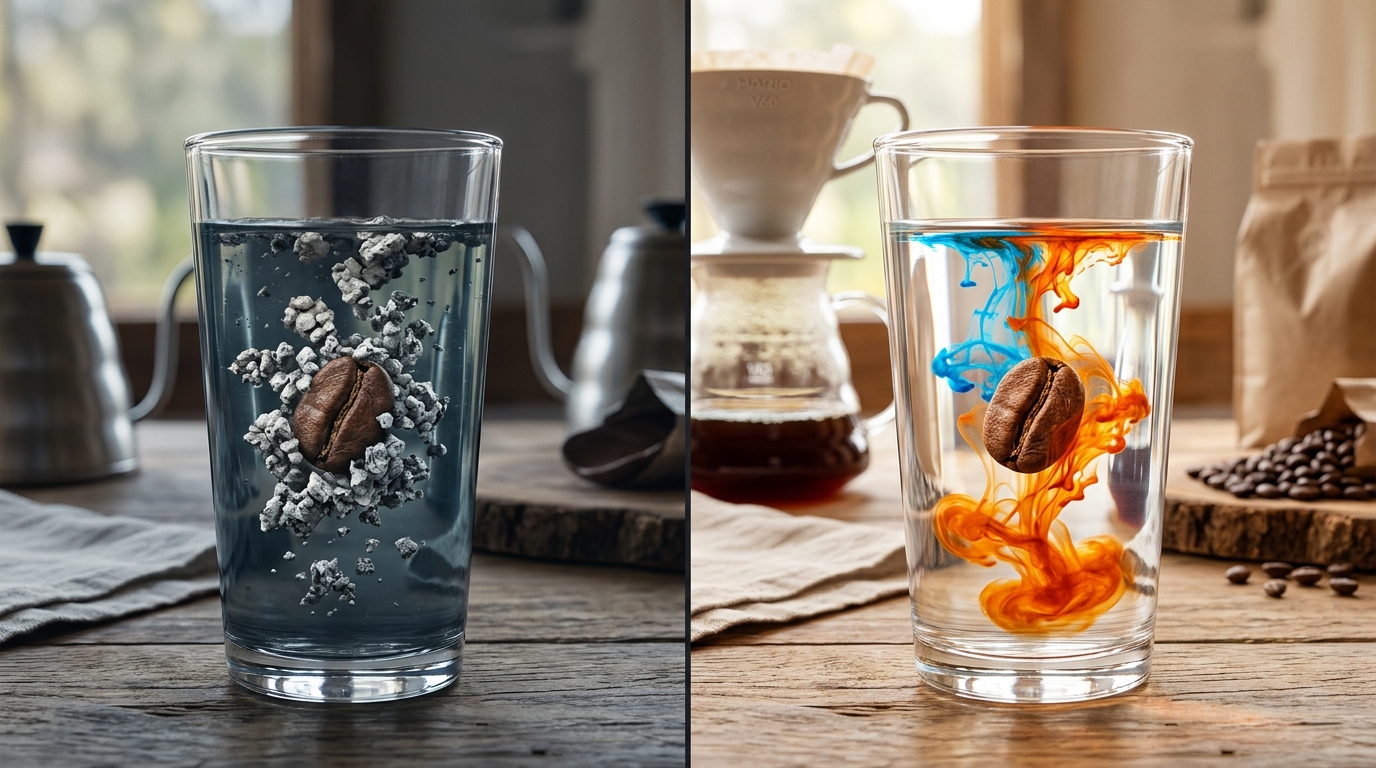
Imagine a detailed infographic showing a single coffee bean submerged in water. On the left side, the water is packed tightly with large, jagged mineral particles representing hard tap water. Because the water is full, the delicate flavor compounds cannot escape the bean. On the right side, the water contains just a few perfectly spaced mineral molecules. Consequently, vibrant streams of flavor and aromatic oils flow freely from the bean into the surrounding water. This visual perfectly illustrates why balanced water chemistry is vital. You need enough empty space in the water to pull out the good stuff!
Why You Should Avoid Tap Water for Coffee
In conclusion, your coffee is only as good as the water you use. We know that pour-over coffee is mostly water. Therefore, relying on unpredictable tap water is a massive gamble. From harsh chlorine to excessive TDS, tap water simply hides the beautiful flavors of your carefully sourced beans. Furthermore, the risk of lead and oxidized metals from old pipes is a real concern in 2026.
Fortunately, the solution is easy. Start using filtered water, or try mixing distilled water with specialized coffee mineral packets. You will be amazed by the sweet, clear flavors that suddenly appear in your cup. So, ditch the tap water tomorrow morning. Treat your beans with the respect they deserve, and brew a truly spectacular pour-over!
Frequently Asked Questions
Can I use a standard pitcher filter to treat tap water for coffee?
Yes, a standard carbon pitcher filter is a great start. It effectively removes chlorine and bad odors. However, it will not significantly lower the TDS or remove heavy metals like lead. For the best results, consider a reverse osmosis system or dedicated coffee minerals.
Is distilled water safe for brewing coffee?
No, you should never use pure distilled water for coffee. Because it lacks minerals, it cannot extract flavors properly. As a result, you get a flat cup. Additionally, pure distilled water can actually corrode the metal inside your coffee equipment over time.
How can I test my home tap water?
You can easily buy a cheap digital TDS meter online. This tool measures the total dissolved solids in seconds. While it does not identify specific minerals, it gives you a great baseline to see if your water is too hard for coffee.