Master Pour-Over Coffee: 5 Steps to Perfect Extraction
There is nothing quite like the ritual of a morning brew. However, achieving cafe-quality coffee at home can sometimes feel impossible. First, many coffee enthusiasts struggle with inconsistent manual brewing. One day your cup is vibrant. Next, it falls flat. As a result, that dreaded afternoon crash hits even harder. Fortunately, you can fix this.
Today, we will explore a foolproof 5-step method to elevate your daily routine. By mastering pour-over coffee, you can unlock the full potential of your favorite single-origin beans. Moreover, a perfectly extracted cup pairs beautifully with healthy morning snacks. For example, try it with almond butter on sourdough. Therefore, let us dive into the art of the perfect pour and transform your kitchen into your favorite cafe.
Essential Gear and Preparation for Manual Brewing
Before you begin, gathering the right equipment is crucial. First, you need a quality brewer. Luckily, there are several great options for home brewing:
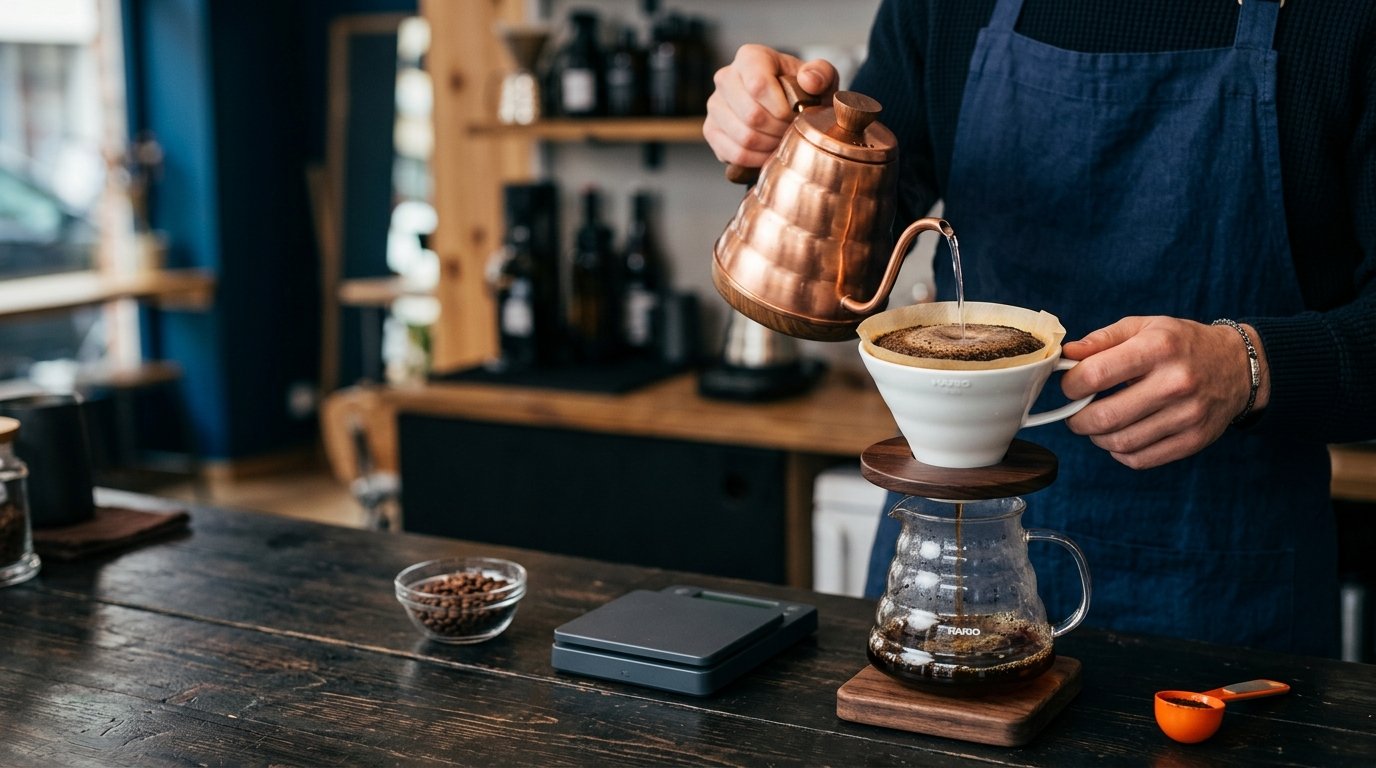
- V60 brewing: The V60 dripper features a conical shape with spiral ridges and a large drainage hole designed for clean and nuanced cups, according to the 2026 Daily Grind Guide.
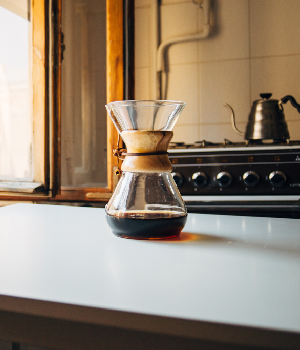
- Chemex: The Chemex utilizes an elegant hourglass design with thick filters to produce ultra-clean cups of coffee.
- Kalita Wave: The Kalita Wave features a flat-bottom design with multiple drainage holes to promote even extraction.
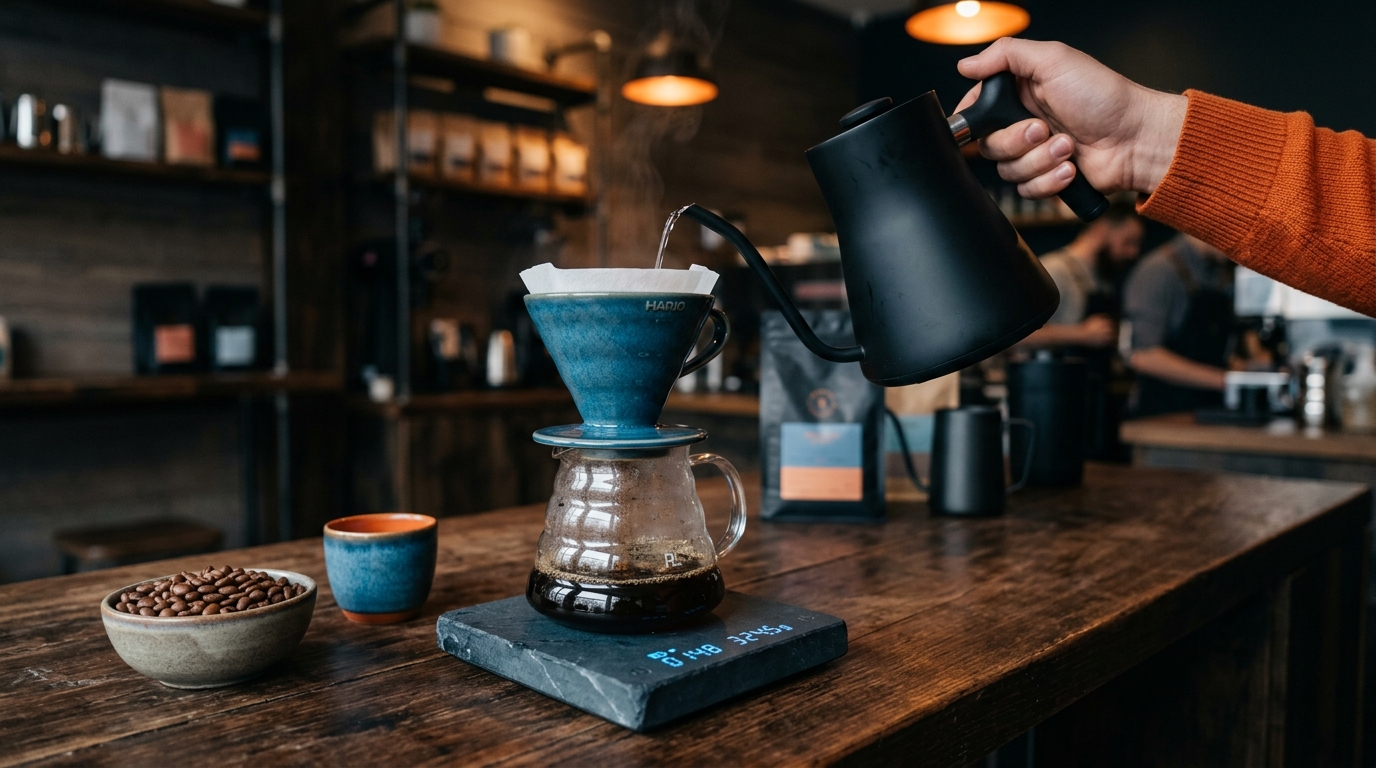
Next, invest in a reliable burr grinder. Dialing in your coffee grind size is essential for success. If your grind is too fine, the water will stall. Conversely, if it is too coarse, the water rushes through. Therefore, aim for a medium-fine consistency. Additionally, you need a gooseneck kettle for precise pouring. Finally, a digital scale ensures your coffee-to-water ratio is exact every single time.
The 5 Steps to Perfect Extraction
Now that your gear is ready, let us start brewing. Follow these five simple steps to achieve a balanced, delicious cup.
Step 1: Prepare Your Water Temperature
First, heat your water. Water temperature plays a massive role in flavor. Interestingly, starting with slightly cooler water (195°F) and gradually increasing the temperature throughout the brew can help develop complex flavors, as noted in the 2026 Daily Grind Guide. Therefore, set your kettle accordingly.
Step 2: Rinse and Measure
Next, place your filter in the brewer. Pour hot water over it to rinse away papery tastes. Furthermore, this step pre-heats your vessel. After that, discard the rinse water. Then, add your freshly ground coffee to the filter and tap it gently to level the bed.
Step 3: The Crucial Bloom Phase
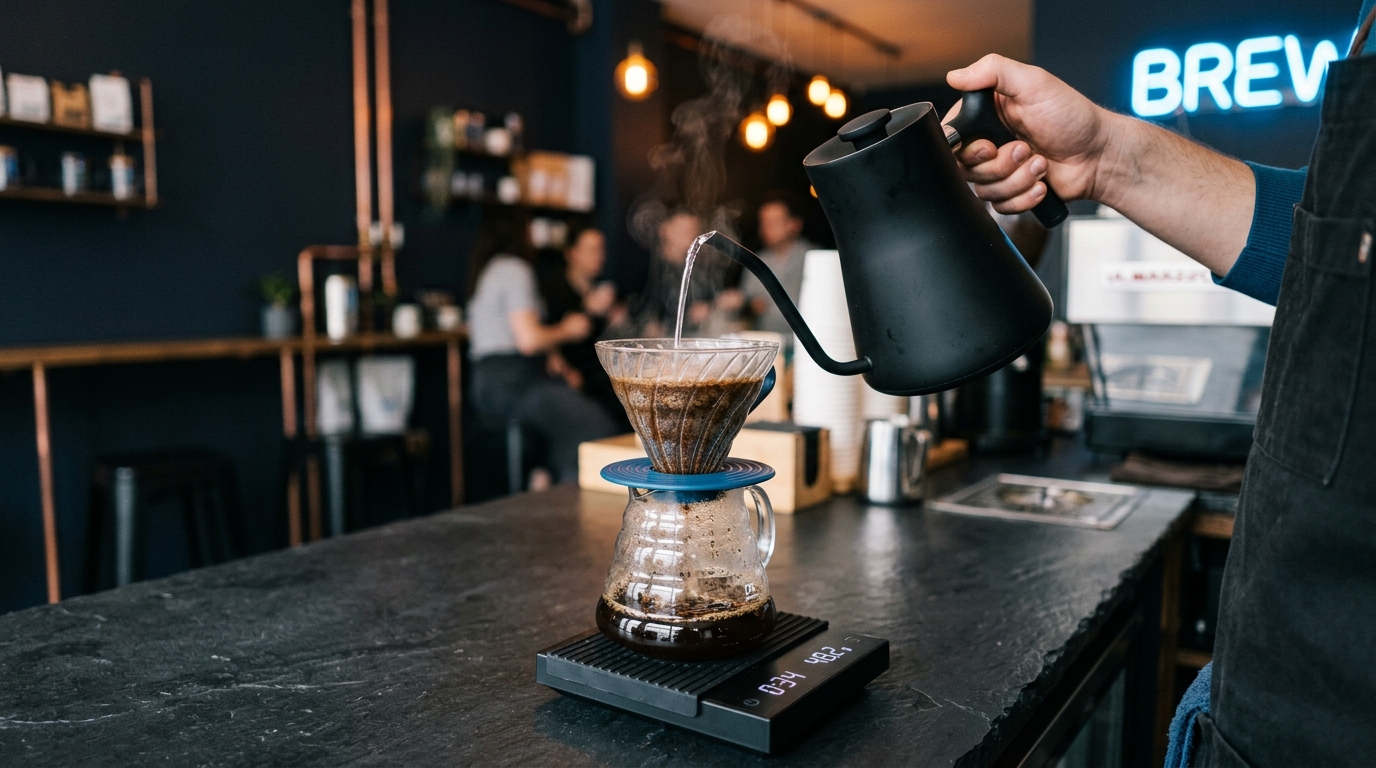
Now, we enter the bloom phase. Start your timer and gently pour water over the grounds. Specifically, the blooming phase of pour-over brewing typically involves pouring 40–50g of water (2 to 2.5 times the coffee weight) for 30 seconds to release trapped carbon dioxide, according to 2025 data from PURE EARTH Coffee Co. Consequently, this step prevents sourness.
Step 4: Controlled Pouring and Agitation
After the bloom, resume pouring in slow, concentric circles. Specifically, start from the center and move outward. This motion creates gentle agitation, which helps extract flavors evenly. Therefore, maintain a steady flow rate. Avoid pouring directly on the paper filter. Instead, keep the water level consistent.
Step 5: Drawdown and Enjoy
Finally, let the water draw down through the coffee bed. The surface should look flat and muddy when finished. Now, pour your freshly brewed coffee into your favorite mug. For an optimal mid-morning health boost, pair it with a handful of walnuts or a slice of avocado toast.
The Science of Extraction
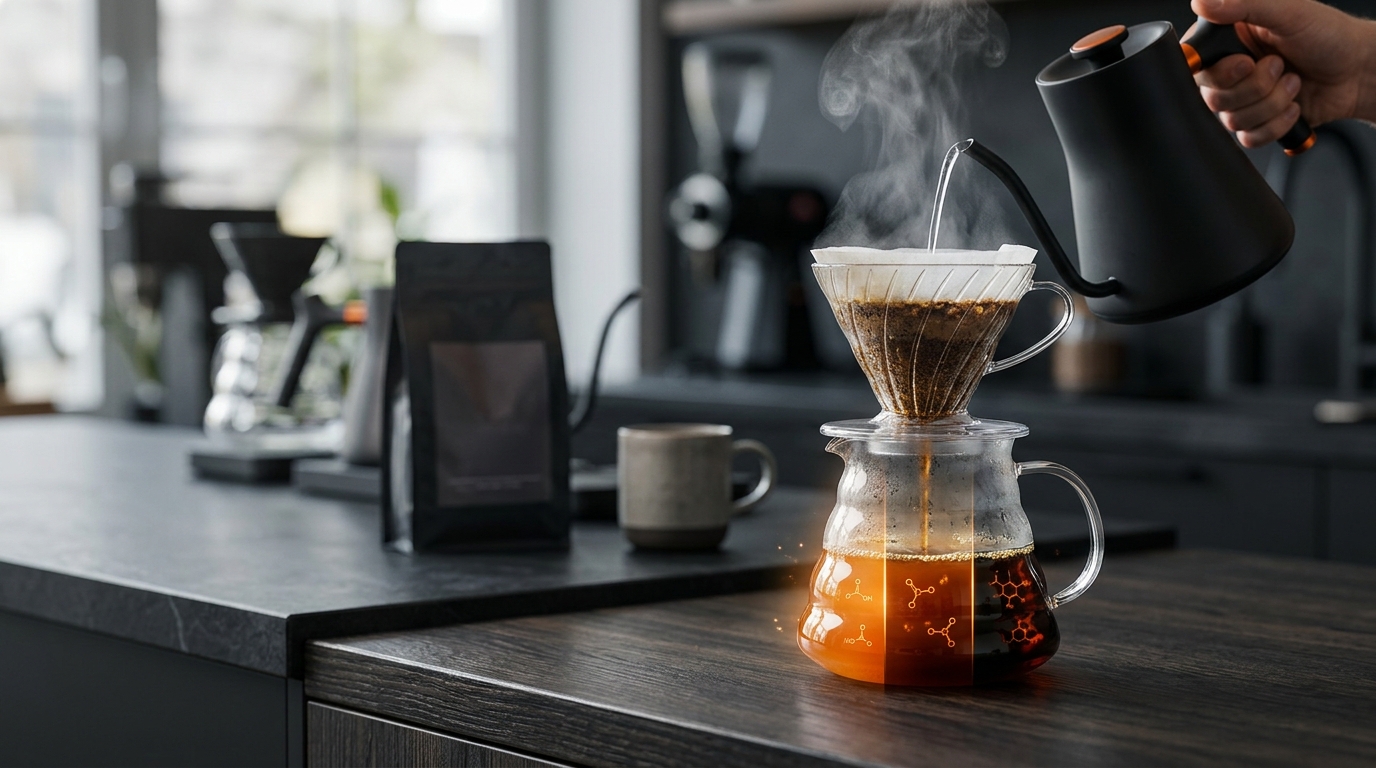
Understanding the chemistry behind coffee extraction will drastically improve your manual brewing. Essentially, extraction refers to the compounds water dissolves from the coffee grounds. First, water extracts acidic and fruity notes. Next, it pulls out sweet sugars. Finally, it extracts bitter plant fibers.
Therefore, balance is everything. If you rush the process, you risk under-extraction. Specifically, under-extracted pour-over coffee results in a sour or thin taste, according to 2026 research by PURE EARTH Coffee Co. Conversely, if you brew too long, you face over-extraction. Over-extracted coffee tastes bitter or harsh. Thus, tracking your time and weight on a scale helps you hit that sweet spot.
The Pouring Technique Map
Visualizing your pour can make the process much easier. Imagine a target over your coffee bed. First, the center ring is where you start your pour. Next, the middle ring is where you spend most of your time. Finally, the outer ring is the boundary you should avoid. By keeping your water stream in the middle zone, you maintain the perfect brewing temperature. Ultimately, this steady, circular map ensures every coffee particle gets equal contact with the water.
Elevate Your Daily Brew
In conclusion, mastering pour-over coffee is a highly rewarding journey. First, you gather the right gear. Next, you control your water temperature and grind size. Then, you execute the bloom phase perfectly. After that, you manage agitation with a steady pour. Finally, you enjoy the delicious results.
By following these five steps, you will banish the dreaded afternoon crash with a vibrant, flavorful cup. Furthermore, pairing your brew with a healthy, protein-rich snack will keep your energy stable all day. Now, grab your kettle and start practicing. Your perfect cup of coffee awaits!
Why is my pour-over coffee brewing too fast?
If your coffee brews too quickly, your coffee grind size is likely too coarse. Therefore, try adjusting your grinder to a slightly finer setting to slow down the water flow.
How can I fix bitter-tasting coffee?
Bitter coffee is a classic sign of over-extraction. To fix this, you can try grinding your beans coarser, lowering your water temperature, or pouring slightly faster to reduce the total brew time.
Do I really need a gooseneck kettle?
Yes, a gooseneck kettle is highly recommended. Specifically, it gives you the control needed to manage agitation and pour in precise, concentric circles, which is vital for even extraction.
What is the best time of day to drink pour-over coffee?
For optimal energy, enjoy your pour-over mid-morning, around 9:30 AM to 11:00 AM. Consequently, this aligns with your natural cortisol dip, preventing the dreaded afternoon crash.